Browsing Category

Devotional

Bible Study, Devotional

A Dove Beyond the Flood

I don’t know about you, but I’m not one who watches the news every day. Our souls are not at their best when we continually take in so much heaviness—especially in the days we are living in, when news flows without pause from both mainstream and independent voices. As I glance at the media now, we are met again and again with reports and images of violence, both near and far—and with wars and rumors of wars telling a dark, age-old truth. It is a heavy weight to bear and behold—a world soaked in hatred, chaos, and unrestrained fury. And sadly, there is nothing new about what we are being exposed to.

Noah lived in a generation much like the one we are living in. He was the 10th generation from Adam and Eve and the great grandson of Enoch. The Bible says that in Noah’s day, the earth was filled with violence (Genesis 6:11). In that verse, the Hebrew word for violence is ḥāmās—cruelty woven into the fabric of daily life, injustice normalized, and oppression exercised without remorse from souls not walking with God.

But here’s what I realized: violence encompasses more than physical harm. At its core, it is a violation of God’s divine standards. The word of God tells us that God’s “commands are holy and right and good” (Romans 7:12, NLT). Any thought or action that does not align perfectly with God’s ways is violent by nature. If we want to walk in truth, we have to call a spade a spade and not allow ourselves to be deceived.

As I was thinking about this, I wanted to go back to when the first act of violence occurred, and I realized that it began with one spiritual being referred to as Lucifer. He was a covering cherub—a high-ranking angel—who is most commonly known as Satan or the Devil. He was in close proximity to God. Can you imagine that? And then something inside him changed. It wasn’t enough to be close to God; he desired the unthinkable—to dethrone God and take His place.

The following verse describes Satan’s internal shift from perfection to corruption:

“You were perfect in your ways from the day you were created, till iniquity was found in you. By the abundance of your trading, you became filled with violence within, and you sinned; therefore I cast you as a profane thing out of the mountain of God; and I destroyed you, O covering cherub, from the midst of the fiery stones.” (Ezekiel 28:15–16, NKJV)

Lucifer was cast from heaven after his rebellion. He not only convinced a third of the angels to rebel against God, but he also eventually tempted the first man and woman to do the same. The human heart was corrupted by the seed of disobedience—born the moment Adam and Eve ate from the Tree of the Knowledge of Good and Evil, which God commanded them not to eat from—and from that moment on, violence entered the human story.

Violence flows from an inner decay that rejects God’s ways. This ḥāmās can be seen in modern extremist movements, where violence is not merely an act but the fruit of ideologies that have turned away from righteousness—distorting truth, destroying life, and hardening hearts against compassion and peace with God and one another.

It is not surprising that the sins of Noah’s time provoked the righteous judgment of God, who sent a global flood to cleanse the corruption that had overtaken His creation. This was never God’s desire for the world He formed with such care. Yet in the midst of that darkness, Noah found favor with God. He was called to build an ark—a vessel of rescue for himself and his family—because he lived by faith and obedience, choosing to walk with God when the world would not.

A Dove Beyond the Flood

Not only is the world presently living in spiritually dark times, but many of us are experiencing a personal deluge of difficult days rising like a flood. Some may even be crying themselves to sleep every night—desperate for relief. And though we know God’s love for us is titanic and unsinkable, we sway like fragile vessels upon the waves and fear we may sink beneath the weight of our sorrows.

Even when we know God’s hand guards us and His presence remains close, it does not always feel so. In seasons of hardship, joy feels distant. We retreat into a shadowed world of pain, where the warmth of hope and the sounds of laughter are muted by the rain and thunder of the storms around us. Still, we pray that the flood of our tears will sink deep into the soil of yesterday, slowly fading like a forgotten memory. And we hold on to the hope that one day we will draw back a curtain and feel a ray of light rest upon our cheek—a gentle, holy kiss from above—reassuring us that the storm is over.

Many of us have released prayer after prayer to the heavenlies, like messenger birds sent from our open hands, waiting for His reply to return. We hope the answer will look the way we imagined. We ache for peace—for our hearts, for our families, for our communities, for our nation, and for the world.

After Noah constructed the ark, he was instructed by God to get inside along with his family, the birds, and the land animals—the seeds of hope for the tomorrows to come. They were secure inside God’s saving grace for roughly 370 days—just a little over a year. Just as the ark was created as a refuge from righteous judgment, God sent His Son, Jesus the Messiah, to rescue us from the violence of sin. Seven months after the flood, the mountains were visible.

Noah opened the window he had made and sent out a raven, who never came back, flying “back and forth” until the floodwaters dried up.

He waited seven days and then sent out a dove, which returned. He waited seven more days and sent out the dove again, and this time it came back with hope in its beak—an olive branch. He sent the dove a third time, and it did not return to the ark. The waters had subsided, and the bird found a place of rest on the land. Every time we pray, God most assuredly answers our prayers in due season.

While on earth, we will live through personal and global times of violence and times of calm. One day, the rising waters of hardship will subside, and we will find that as the deep waters kept rising in our personal lives, we were also being elevated spiritually—finding ourselves on the mountain of God. This is where our help comes from. And we realize that what felt like a prison was actually our liberty. While the raven never returned to God’s protection, feeding off the destroyed world, the dove did not settle until it found a habitable place to live on the mountains.

Day by day, we should seek to disengage from the transitory and mundane and find our hope and peace in the permanence of God’s love and care for us. Our pain can drown us or cause us to seek God. Let’s focus on living in the secret place with our Everlasting Father, our Prince of Peace, Jesus, and the Holy Spirit.

The dove with an olive branch is a beautiful symbol of peace, hope, and restoration. Rooted in the story of Noah, it reminds us that after every storm—every war, whether personal or global—God will eventually bring peace and renewal. Like the white dove in flight with hope in its beak, it whispers that conflict will end and harmony will return under His faithful care for those who put their trust in Him.

We pray that the flood of our tears will sink deep into the soil of yesterday, slowly fading like a forgotten memory. And we hold on to the hope that one day, we will draw back a curtain and feel a ray of light rest upon our cheek—a gentle, holy kiss from above—reassuring us that the storm is over.

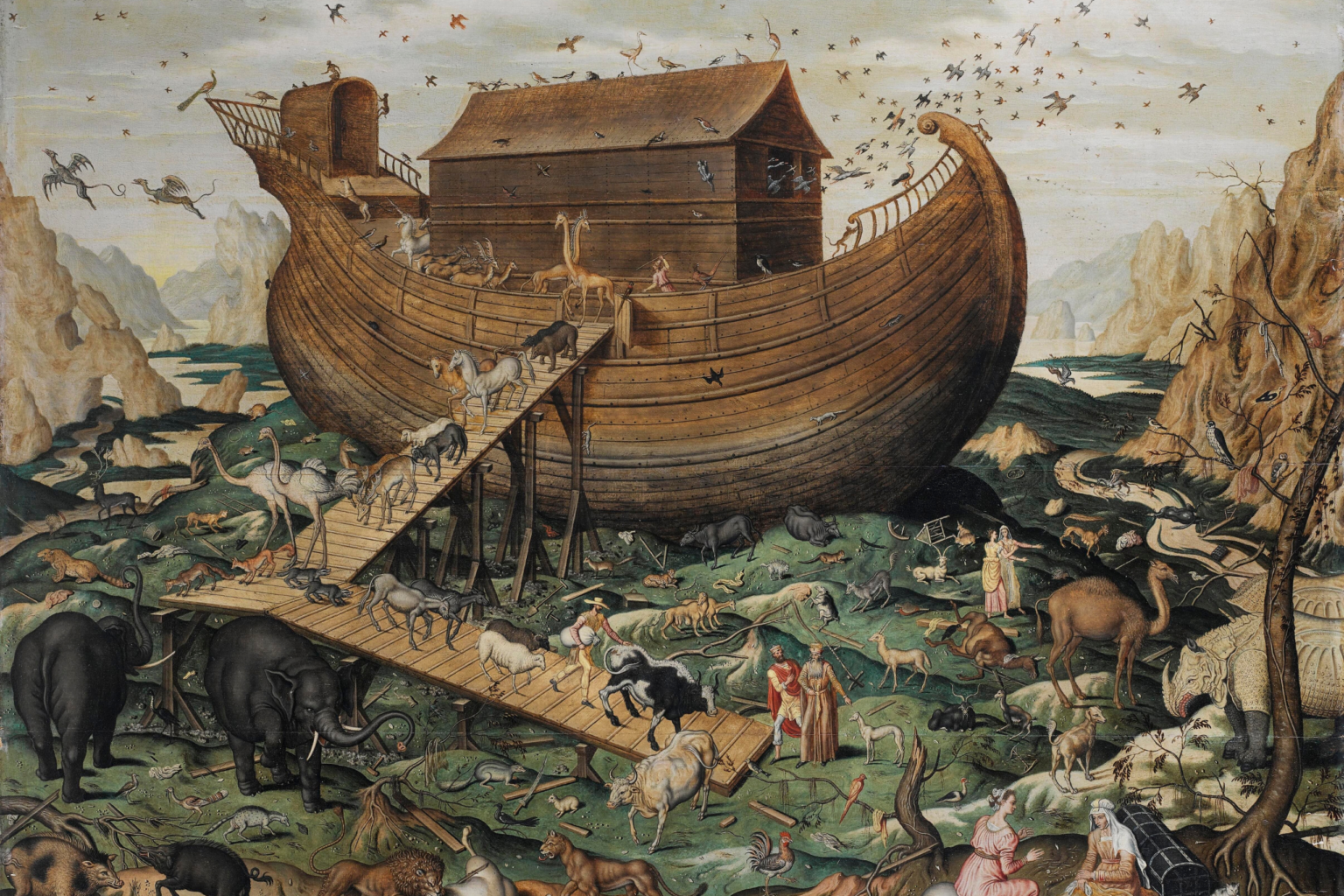
Noah’s Ark on Mount Ararat, oil on canvas painting by Simon de Myle, 1570 CE. Private collection, Paris.

Devotional

The Promise of God’s Presence

This past year has been a torrent of loss for my husband—from his mother, father, and brother to the recent passing of a dear childhood friend. Day by day, God’s peace and strength have sustained us as we’ve walked through this long valley of shadows with Him. We continue to trust that God brings beauty from the ashes we surrender to Him, even as we emerge from the wilderness of hardship.

I recently listened to a teaching on Joshua and how God uniquely positioned him to lead Israel north into Canaan after Moses’ death. The message emphasized that Joshua’s leadership didn’t happen overnight. While serving faithfully under Moses, he learned to trust God. He and Caleb had once spied out the Promised Land with confidence that God would give it to Israel, but the people’s fear delayed their entry for another 38 years. By the time Joshua finally faced the giants in the land and led Israel toward their inheritance, he was about 78 years old. Yet he remained faithful, and God preserved his strength throughout the wilderness years. Joshua ultimately fulfilled his calling as a bold, courageous, and steadfast leader.

The wilderness seasons of our lives bring with them the temptation to forfeit our trust in God’s truth, for a platter of lies. But we’ve learned to appraise lies against the truth of God’s word—which has been our only sustenance in a dry and thirsty land, where untainted spiritual food is scarce. Even so, we’ve been fed at a table set before us by our God—in the very presence of our enemies. He has not failed us, and He never will.  

We’re living in a time when confronting lies—in the form of spiritual giants in our culture and in our lives—has become a daily reality and a decision. Yet, those of us who have remained faithful—uncompromising and anchored in the word of God and the supernatural revelation of His Holy Spirit—carry a strength forged in the long, often difficult wilderness seasons of our lives. Those holy, hard, and hidden years of pruning, obedience, and trust—while God collected our tears in a bottle—have not been wasted. 

We don’t need a platform or a formal ministry to be godly leaders. We simply need to live as examples worth following. As a spouse, a parent, a child, a friend, a neighbor, or a coworker, we can lead. Leadership doesn’t have to be loud or public—it is a steady, humble walk of integrity that quietly draws the attention of those around us. It’s a call to follow the King of Kings with courage and a consistent commitment to God’s truth.

As we continue to walk intimately with Jesus, the Messiah, we become equipped to guide others through the spiritual battles and giants they face. Just as He has sustained us, shaped us, and strengthened us to stand firm, He will use our journey to help lead others toward freedom, healing, and the promises God has prepared for them. Our journey through the wilderness becomes a testimony, and our faith in the God who led us out becomes a sure pathway for others to follow into the promised land of God’s glorious presence for an eternity.  

May our faithful walk lead many to the feet of the Savior of the world!

Este último año ha sido un torrente de pérdidas para mi esposo: desde su madre, su padre y su hermano hasta el reciente fallecimiento de un querido amigo de la infancia. Día tras día, la paz y la fortaleza de Dios nos han sostenido mientras caminábamos por este largo valle de sombras con Él. Seguimos confiando en que Dios saca belleza de las cenizas que le entregamos, incluso mientras emergemos del desierto de las dificultades.

Recientemente escuché una enseñanza sobre Josué y cómo Dios lo posicionó de manera única para guiar a Israel hacia el norte, a Canaán, después de la muerte de Moisés. El mensaje enfatizaba que el liderazgo de Josué no surgió de la noche a la mañana. Mientras servía fielmente bajo Moisés, aprendió a confiar en Dios. Él y Caleb habían explorado la Tierra Prometida con la confianza de que Dios se la daría a Israel, pero el miedo del pueblo retrasó su entrada durante otros 38 años. Cuando Josué finalmente se enfrentó a los gigantes en la tierra y guió a Israel hacia su herencia, tenía alrededor de 78 años. Sin embargo, permaneció fiel, y Dios preservó su fuerza durante los años en el desierto. Josué finalmente cumplió su llamado como un líder audaz, valiente e inquebrantable.

Las temporadas de desierto en nuestras vidas traen consigo la tentación de renunciar a nuestra confianza en la verdad de Dios a cambio de un plato de mentiras. Pero hemos aprendido a discernir las mentiras a la luz de la verdad de la palabra de Dios, que ha sido nuestro único sustento en una tierra seca y sedienta, donde el alimento espiritual puro es escaso. Aun así, hemos sido alimentados en una mesa preparada por nuestro Dios, en la misma presencia de nuestros enemigos. Él no nos ha fallado, y nunca lo hará.

Vivimos en una época en la que confrontar las mentiras, en forma de gigantes espirituales en nuestra cultura y en nuestras vidas, se ha convertido en una realidad diaria y en una decisión. Sin embargo, aquellos de nosotros que hemos permanecido fieles, firmes e inquebrantables en la palabra de Dios y en la revelación sobrenatural de su Espíritu Santo, poseemos una fuerza forjada en las largas y a menudo difíciles temporadas de desierto de nuestras vidas. Esos años santos, difíciles y ocultos de poda, obediencia y confianza, mientras Dios recogía nuestras lágrimas en un frasco, no han sido en vano.

No necesitamos una plataforma ni un ministerio formal para ser líderes piadosos. Simplemente necesitamos vivir como ejemplos dignos de ser seguidos. Como cónyuges, padres, hijos, amigos, vecinos o compañeros de trabajo, podemos ejercer liderazgo. El liderazgo no tiene por qué ser ruidoso ni público; es un camino constante y humilde de integridad que atrae discretamente la atención de quienes nos rodean. Es un llamado a seguir al Rey de Reyes con valentía y un compromiso constante con la verdad de Dios.

A medida que continuamos caminando íntimamente con Jesús, el Mesías, nos capacitamos para guiar a otros a través de las batallas espirituales y los desafíos que enfrentan. Así como Él nos ha sostenido, transformado y fortalecido para permanecer firmes, usará nuestro camino para ayudar a otros a alcanzar la libertad, la sanación y las promesas que Dios ha preparado para ellos. Nuestro camino por el desierto se convierte en un testimonio, y nuestra fe en el Dios que nos guió se convierte en un camino seguro para que otros sigan hacia la tierra prometida de la gloriosa presencia de Dios por toda la eternidad.

¡Que nuestro caminar fiel guíe a muchos a los pies del Salvador del mundo!

Devotional

What You Gather, You Keep

When we do what pleases God, He is faithful to take care of us. And what pleases God’s heart is when we lay our desires down to care for another, even when it is hard. That person may depend on us for sustenance or comfort, and the duties of the day may repeat themselves, sometimes for years.

We’re exhausted and keep going, but can’t figure out where the energy is coming from, until we figure it out. It may take us a minute to see God at work behind the scenes, how that season will teach us the deepest lessons, and the reward for our faithfulness to Him.

When we’ve lost loved ones, feel like we have no resources, and the plans for our lives have been eaten by the moths of time, God reveals Himself as the One who loves us and has given us the strength to endure the hardest of the hard.

And we also see our redeemer’s life and sacrifice more clearly. Jesus’ mission was other-focused. He wasn’t after what was best for Him. Jesus did not spend His time on platforms; He went after people. His ears were attuned to hear the Father, and His eyes were set on His ways.

This reminds me of the biblical story of Ruth the Moabitess. Moab was a pagan nation with a historical animosity toward the Israelites. Ruth ended up marrying an Israelite from Bethlehem who had sojourned to Moab with his parents and brother, due to a famine in Israel. Before her marriage, her father-in-law died, leaving Naomi, her future mother-in-law, widowed. After the two sons died as well, all the women suffered shared losses.

But Ruth would not leave her mother-in-law’s side, even when she was telling her to go back to her people and to her gods. Ruth was determined not to leave Naomi and journeyed with her back to Bethlehem. She left behind a cruel and pagan nation whose priests served a host of idols, including the feared god Molech, whom they would offer child sacrifices to. Ruth decided to not only follow Naomi, but the God of Israel as well.

After they arrived in Bethlehem, Ruth asked Naomi to allow her to go to a field and glean among the ears of grain after the reapers. That is where she met Boaz, a man of great wealth. He said to her, “Listen carefully, my daughter. Do not go to glean in another field; furthermore, do not go from this one, but stay here with my maids.” 

Ruth only gleaned in the field of Boaz while she was living with Naomi through a hard season.

Is that not what Jesus says to us? Do not go to other fields for your bread, for … “I am the bread of life.” Glean from the field of God’s word, verse by verse, for His plans, promises, and provision. The scriptures are an endless treasury for our souls, earmarked for each of us for all of our days. They will provide us with living truth, hope, comfort, joy, and wisdom, amidst a world of derelict ideas that attempt to drag us away from walking with God.

Ruth asked Boaz why she had found favor in his eyes, and he replied that he was told of all that she had done for her mother-in-law and how she left her parents and the land of her birth for an unknown future. God is the redeemer of our losses and our time. Ruth was favored by Boaz; he was kind to her and comforted her, even though she was not like the other maidservants.

Although it was not her motive, Ruth was graciously blessed, and Boaz married her, after the first in line to buy Naomi’s property and marry Ruth, rejected the offer. We know that too well. Although we may be the world’s pickings, we are created, chosen, and cherished by the God who sacrificed His son, Jesus, that we may have an eternal home in the wealth of His presence, as sons and daughters and the glorious bride of the Messiah.

What became of Ruth after she married Boaz? She became the great-grandmother of King David and an ancestor of Jesus Christ. God has a plan for each of our lives, but they may not all look the same or go as we planned, but it will be a fulfilled life, if we live like Christ, who laid down His life, that others may live.   

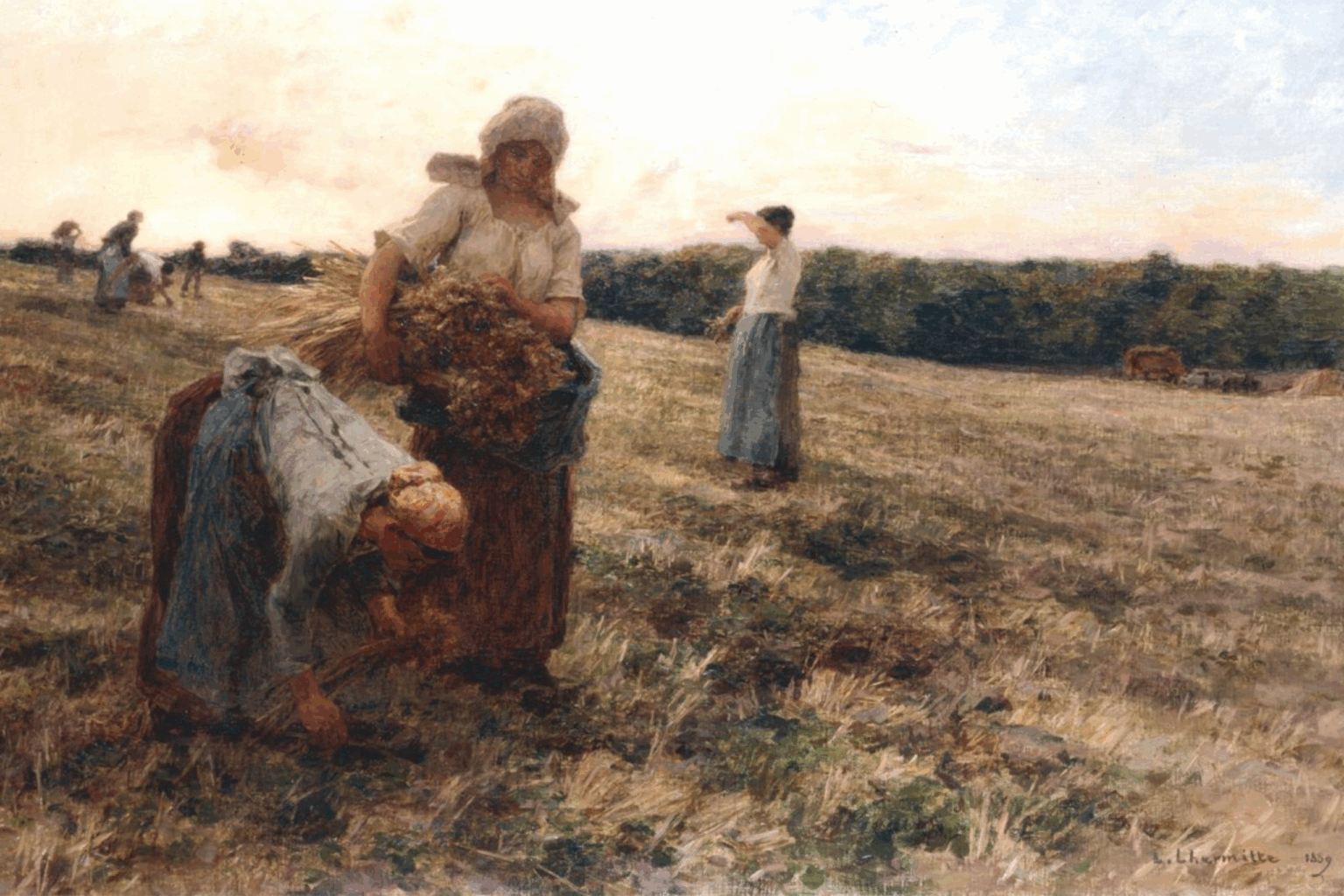
Photo: “Gleaners at Sunset’ by French realist artist Leon-Augustin Lhermitte (1889)

Boaz went over and said to Ruth, “Listen, my daughter. Stay right here with us when you gather grain; don’t go to any other fields. Stay right behind the young women working in my field. - Ruth 2:8, NLT

May the Lord reward your work, and may your wages be full from the Lord, the God of Israel, under whose wings you have come to take refuge. - Ruth 2:12 NASB

And now, my daughter, do not fear, I will do for you all that you ask, for all my fellow townsmen know that you are a woman of worth. - Ruth 3:11 RSV

Cuando hacemos lo que agrada a Dios, Él es fiel en cuidarnos. Y lo que agrada a Dios es cuando entregamos nuestro deseo de cuidar a otra persona, incluso cuando es difícil. Esa persona puede depender de nosotros para su sustento o consuelo, y las tareas del día pueden repetirse, a veces durante años.

Estamos agotados y seguimos adelante, pero no podemos entender de dónde proviene la energía hasta que lo descubrimos. Puede que nos tome un minuto ver a Dios obrando tras bambalinas, cómo esa etapa nos enseñará las lecciones más profundas y la recompensa por nuestra fidelidad a Él.

Cuando hemos perdido a seres queridos, sentimos que no tenemos recursos y los planes para nuestras vidas se han devorado por el paso del tiempo, Dios se revela como Aquel que nos ama y nos ha dado la fuerza para soportar lo más difícil.

Y también vemos con mayor claridad la vida y el sacrificio de nuestro redentor. La misión de Jesús estaba centrada en los demás. No buscaba lo mejor para sí mismo. Jesús no pasaba su tiempo en plataformas; buscaba a la gente. Sus oídos estaban atentos al Padre y su mirada puesta en sus caminos.

Esto me recuerda la historia bíblica de Rut la moabita. Moab era una nación pagana con una animosidad histórica hacia los israelitas. Rut terminó casándose con un israelita de Belén que había emigrado a Moab con sus padres y su hermano debido a una hambruna en Israel. Antes de casarse, su suegro murió, dejando viuda a Noemí, su futura suegra. Tras la muerte de sus dos hijos, todas las mujeres sufrieron pérdidas compartidas.

Pero Rut no se separó de su suegra, ni siquiera cuando esta le decía que regresara con su pueblo y sus dioses. Rut estaba decidida a no dejar a Noemí y viajó con ella de regreso a Belén. Dejó atrás una nación cruel y pagana cuyos sacerdotes servían a una multitud de ídolos, incluyendo al temido dios Moloc, a quien ofrecían sacrificios de niños. Rut decidió no solo seguir a Noemí, sino también al Dios de Israel.

Después de llegar a Belén, Rut le pidió a Noemí que la dejara ir a un campo a espigar entre las espigas tras los segadores. Allí conoció a Booz, un hombre rico. Él le dijo: «Escucha atentamente, hija mía. No vayas a espigar a otro campo; ni te vayas de este, sino quédate aquí con mis criadas».

Rut solo espigó en el campo de Booz mientras vivía con Noemí una época difícil.

¿No es eso lo que nos dice Jesús? No vayan a otros campos en busca de su pan, porque… «Yo soy el pan de vida». Espiguen del campo de la palabra de Dios, versículo a versículo, para conocer sus planes, promesas y provisión. Las Escrituras son un tesoro inagotable para nuestras almas, destinadas a cada uno de nosotros para todos nuestros días. Nos brindarán verdad viva, esperanza, consuelo, alegría y sabiduría, en medio de un mundo de ideas abandonadas que intentan apartarnos de nuestro caminar con Dios.

Rut le preguntó a Booz por qué había hallado favor ante sus ojos, y él respondió que le habían contado todo lo que ella había hecho por su suegra y cómo dejó a sus padres y su tierra natal por un futuro incierto. Dios es el redentor de nuestras pérdidas y de nuestro tiempo. Rut fue favorecida por Booz; él fue bondadoso con ella y la consoló, aunque ella no era como las demás siervas.

Aunque no era su motivo, Rut fue bendecida generosamente, y Booz se casó con ella, después de que el primero en la fila para comprar la propiedad de Noemí y casarse con Rut rechazara la oferta. Lo sabemos muy bien. Aunque seamos la presa predilecta del mundo, somos creados, elegidos y amados por el Dios que sacrificó a su hijo, Jesús, para que tengamos un hogar eterno en la riqueza de su presencia, como hijos e hijas y la gloriosa novia del Mesías.

¿Qué fue de Rut después de casarse con Booz? Se convirtió en la bisabuela del rey David y antepasada de Jesucristo. Dios tiene un plan para cada una de nuestras vidas, aunque puede que no todas sean iguales ni transcurran como las planeamos, pero será una vida plena si vivimos como Cristo, quien dio su vida para que otros puedan vivir.

Booz se acercó y le dijo a Rut: «Escucha, hija mía. Quédate aquí con nosotros cuando recojas el grano; no vayas a ningún otro campo. Quédate detrás de las jóvenes que trabajan en mi campo.» (Rut 2:8, NTV)

Que el Señor recompense tu trabajo, y que tu salario sea completo de parte del Señor, Dios de Israel, bajo cuyas alas has venido a refugiarte. - Rut 2:12 NVI

Y ahora, hija mía, no temas, yo haré por ti todo lo que me pidas, pues todos mis conciudadanos saben que eres una mujer valiosa. - Rut 3:11 RVR

Devotional

Clearing Your Mind of Clutter

The other day our car sounded an alarm indicating that one of the doors was not closed properly. After closing the door, the alarm continued to sound, even though the door was securely shut. It seemed stuck on the past, still alerting us to an issue that had already been resolved. This made me reflect on how often we do the same thing—constantly ruminating over what has already happened and, in many cases, has been resolved.

We live in an age of unprecedented access to information, but this also leads to information overload. Our minds function like web browsers that can become cluttered. On a spiritual level, we accumulate “data”—thoughts, emotions, experiences, and stressors that can weigh us down and hinder our ability to live healthy and spiritually productive lives, making it crucial to “clear the cache.” Similarly, when we browse the internet, our browsers store various data files, known as a cache, to speed up access to frequently visited websites. Clearing this cache refreshes the system, allowing for smoother functionality and improved performance.

Clearing our spiritual cache involves engaging in holy and practical habits. They help us release thoughts that are not aligned with God’s intentions for us. In turn, we embrace His thoughts through His written word. God has an endless treasury of profound ancient secrets that He wants us to access, meditate on, align with, and share through the Holy Spirit of God that our souls may prosper and live in peace.

Spiritual Practices for Renewing Our Minds

  1. Read the Word: For everything that was written in the past was written to teach us, so that through the endurance taught in the Scriptures and the encouragement they provide we might have hope. —2 Timothy 3:16-17 NIV
  1. Meditate on the Word: This book of instruction must not depart from your mouth; you are to meditate on it day and night so that you may carefully observe everything written in it. For then you will prosper and succeed in whatever you do. —Joshua 1:8 CSB
  1. Pray the Word: On your walls, Jerusalem, I have placed sentries; they must never be silent day or night. They must remind the Lord of his promises and never let him forget them. They must give him no rest until he restores Jerusalem and makes it a city the whole world praises. —Isaiah 62:6-7 GNT
  1. Write the Word: Write the vision and make it plain on tablets, that he may run who reads it. —Habakkuk 2:2 NKJV
  1. Walk with the Word: Your word is a lamp for my steps;it lights the path before me. —Psalm 119:105 VOICE
  1. Create with the Word: Death and life are in the control of the tongue. Those who indulge in it will eat its fruit. —Proverbs 18:21 TLV 
  1. Share the Word: But you will receive power when the Holy Spirit has come upon you; and you shall be My witnesses both in Jerusalem and in all Judea, and Samaria, and as far as the remotest part of the earth. —Acts 1:8 NASB

Embracing these practices not only enhances our daily experiences but also fosters a deeper connection with God and with each other. I pray we commit to these life-transforming disciplines that will refresh and restore our souls.

El otro día, nuestro coche sonó una alarma que indicaba que una de las puertas no estaba bien cerrada. Tras cerrar la puerta, la alarma siguió sonando, aunque la puerta estuviera bien cerrada. Parecía anclada en el pasado, alertándonos de un problema ya resuelto. Esto me hizo reflexionar sobre la frecuencia con la que hacemos lo mismo: rumiar constantemente sobre lo que ya ha sucedido y, en muchos casos, se ha resuelto.

Vivimos en una era de acceso sin precedentes a la información, pero esto también conduce a una sobrecarga de información. Nuestras mentes funcionan como navegadores web que pueden saturarse. A nivel espiritual, acumulamos “datos”: pensamientos, emociones, experiencias y factores estresantes que pueden agobiarnos y dificultar nuestra capacidad de llevar una vida sana y espiritualmente productiva, por lo que es crucial “borrar la caché”. De igual manera, cuando navegamos por internet, nuestros navegadores almacenan varios archivos de datos, conocidos como caché, para acelerar el acceso a los sitios web que visitamos con frecuencia. Borrar esta caché refresca el sistema, lo que permite una funcionalidad más fluida y un mejor rendimiento.

Borrar nuestra caché espiritual implica adoptar hábitos santos y prácticos. Nos ayudan a liberar pensamientos que no se alinean con las intenciones de Dios para nosotros. A su vez, abrazamos sus pensamientos a través de su palabra escrita. Dios tiene un tesoro inagotable de profundos secretos antiguos que desea que accedamos, meditemos, nos alineemos con ellos y compartamos a través del Espíritu Santo de Dios para que nuestras almas prosperen y vivamos en paz.

Prácticas Espirituales para Renovar Nuestras Mentes

  1. Leer la Palabra: Porque todo lo que se escribió en el pasado se escribió para nuestra enseñanza, a fin de que mediante la perseverancia que se enseña en las Escrituras y el aliento que ellas brindan, tengamos esperanza. —2 Timoteo 3:16-17 NVI
  2. Meditar en la Palabra: Este libro de instrucción no debe apartarse de tu boca; debes meditar en él día y noche para que guardes cuidadosamente todo lo que está escrito en él. Porque entonces prosperarás y tendrás éxito en todo lo que hagas. —Josué 1:8 NVI
  3. Orar la Palabra: Sobre tus murallas, Jerusalén, he puesto centinelas; nunca deben callar de día ni de noche. Deben recordarle al SEÑOR sus promesas y nunca dejar que las olvide. No deben darle descanso hasta que restaure Jerusalén y la convierta en una ciudad que el mundo entero alabe. —Isaías 62:6-7 (NTV)
  4. Escribe la Palabra: Escribe la visión y grábala en tablas, para que corra quien la lea. —Habacuc 2:2 (RVR1960)
  5. Camina con la Palabra: Tu palabra es una lámpara para mis pasos; alumbra el camino que está delante de mí. —Salmo 119:105 (RVR1960)
  6. Crea con la Palabra: La muerte y la vida están en el control de la lengua. Quienes se entregan a ella comerán de su fruto. —Proverbios 18:21 (NTV)
  7. Comparte la Palabra: Pero recibirán poder cuando el Espíritu Santo haya venido sobre ustedes, y serán mis testigos en Jerusalén, en toda Judea, en Samaria y hasta los confines de la tierra. —Hechos 1:8 NVI

Adoptar estas prácticas no solo enriquece nuestras experiencias diarias, sino que también fomenta una conexión más profunda con Dios y con los demás. Ruego que nos comprometamos con estas disciplinas transformadoras que refrescarán y restaurarán nuestras almas.

Devotional

Wells of Salvation

When you lose loved ones, you tend to reflect more on life, death, and what may come after. My husband, Merl, lost his mother, father, and brother within a span of less than six months, which is why I paused my monthly newsletter for that time. We have been walking together through the valley of the shadow of death with God, who urges us not to fear because He is with us.

Despite the magnitude of our losses, we have witnessed God’s faithfulness and experienced a supernatural peace that surpasses our understanding. We prayed for healing, for peaceful transitions, and for salvation, and God answered each prayer—not in the way we might have scripted, but with His perfect love. He always does.

As we approach the warmer months of the year, we’re reminded that nothing satisfies a natural thirst more than a chug of fresh water. The same is true for spiritual thirst. The source of living water that quenches this kind of thirst is found in the wells of salvation, which never run dry.

Wells were essential for life, especially in arid regions like ancient Israel. Their depth made them difficult to draw water from, and they were often covered with stones to prevent them from being filled with dirt. Nearby, there would typically be a trough for animals.

You would often find women and travelers at wells. These locations were also the settings for several divine encounters, such as the timely meeting between Rebekah and Abraham’s servant, who was tasked with finding Isaac a wife from among his relatives. Another unforgettable story is that of the woman of Samaria who met Jesus the Messiah. She relied on the well that Jacob had dug centuries earlier, and in return, Jesus offered her “living water” to satisfy her spiritual thirst. (See John 4:1-42)

Jacob’s grandfather, Abraham, dug many wells before him, and Abraham’s son, Isaac, had to dig them again after the Philistines spitefully filled them with earth, envious of his growing power and prosperity. Just like the Philistines, the enemies of our souls—both spiritual and earthly—will try to fill us with everything but God.

Wells hold water. We were created as jars of clay to hold spiritual water, which we are meant to share with others. This means we must remove the earthly clutter that occupies space in our lives, preventing us from being filled with the water of life. The scriptures teach us to be filled with the Holy Spirit, described as “rivers of living water” flowing through us.

What wells should we draw from? Where should we find our identity, faith, wisdom, and purpose? What are we allowing to flow through our souls? We often attempt to quench our thirst by drinking from broken cisterns (or systems)—temporary solutions from this world that frequently leave us disappointed. We seek comfort in material possessions and worldly pleasures, peace from self-help gurus, justice from unjust authorities, and wealth from earthly sources, when what we truly need is found in Jesus: God’s Word and Creator of all.

The wells of salvation are a spiritual and eternal reservoir filled with everything we genuinely need. All of God’s desires for us are fulfilled through His once-hidden, now masterfully revealed salvation plan for humanity through His Son. God tells us that knowing Him is eternal life. Knowing God satisfies all that is lacking within us, and His Spirit will flow through us to bring us back to life.

Therefore, with joy you will draw water from the wells of salvation. – Isaiah 12:3, NKJV

For My people have committed two evils: They have forsaken Me, the fountain of living waters, and hewn themselves cisterns—broken cisterns that can hold no water. – Jeremiah 2:13, NKJV

The mystery which had been hidden from the past ages and generations, but now has been revealed to His saints, to whom God willed to make known what the wealth of the glory of this mystery among the Gentiles is, the mystery that is Christ in you, the hope of glory. – Colossians 1:26-27, NASB

Cuando se pierde a un ser querido, se tiende a reflexionar más sobre la vida, la muerte y lo que pueda venir después. Mi esposo, Merl, perdió a su madre, padre y hermano en menos de seis meses, por lo que suspendí mi boletín mensual por ese tiempo. Hemos estado caminando juntos por el valle de sombra de muerte con Dios, quien nos insta a no temer porque Él está con nosotros.

A pesar de la magnitud de nuestras pérdidas, hemos sido testigos de la fidelidad de Dios y hemos experimentado una paz sobrenatural que sobrepasa nuestro entendimiento. Oramos por sanidad, por transiciones pacíficas y por salvación, y Dios respondió a cada oración, no de la manera que hubiéramos planeado, sino con su amor perfecto. Siempre lo hace.

Al acercarse los meses más cálidos del año, recordamos que nada satisface mejor la sed natural que un trago de agua fresca. Lo mismo ocurre con la sed espiritual. La fuente de agua viva que calma esta sed se encuentra en los pozos de salvación, que nunca se secan.

Los pozos eran esenciales para la vida, especialmente en regiones áridas como el antiguo Israel. Su profundidad dificultaba la extracción de agua, y a menudo se cubrían con piedras para evitar que se llenaran de tierra. Cerca, solía haber un abrevadero para animales.

A menudo se encontraban mujeres y viajeros junto a los pozos. Estos lugares también fueron escenario de varios encuentros divinos, como el oportuno encuentro entre Rebeca y el siervo de Abraham, quien recibió la tarea de encontrarle una esposa a Isaac entre sus parientes. Otra historia inolvidable es la de la mujer de Samaria que conoció a Jesús el Mesías. Ella confió en el pozo que Jacob había cavado siglos antes, y a cambio, Jesús le ofreció “agua viva” para saciar su sed espiritual. (Véase Juan 4:1-42)

El abuelo de Jacob, Abraham, cavó muchos pozos antes que él, y su hijo, Isaac, tuvo que cavarlos de nuevo después de que los filisteos, con rencor, los llenaran de tierra, envidiosos de su creciente poder y prosperidad. Al igual que los filisteos, los enemigos de nuestras almas, tanto espirituales como terrenales, intentarán llenarnos con todo menos con Dios.

Los pozos contienen agua. Fuimos creados como vasijas de barro para contener agua espiritual, la cual debemos compartir con los demás. Esto significa que debemos eliminar el desorden terrenal que ocupa espacio en nuestras vidas, impidiéndonos ser llenos del agua de la vida. Las Escrituras nos enseñan a ser llenos del Espíritu Santo, descrito como “ríos de agua viva” que fluyen a través de nosotros.

¿De qué pozos debemos beber? ¿Dónde debemos encontrar nuestra identidad, fe, sabiduría y propósito? ¿Qué permitimos que fluya a través de nuestras almas? A menudo intentamos saciar nuestra sed bebiendo de cisternas (o sistemas) rotas: soluciones temporales de este mundo que con frecuencia nos decepcionan. Buscamos consuelo en las posesiones materiales y los placeres mundanos, paz en los gurús de la autoayuda, justicia en las autoridades injustas y riqueza en fuentes terrenales, cuando lo que realmente necesitamos se encuentra en Jesús: la Palabra de Dios y Creador de todo.

Las fuentes de la salvación son un reservorio espiritual y eterno, lleno de todo lo que realmente necesitamos. Todos los deseos de Dios para nosotros se cumplen mediante su plan de salvación para la humanidad, antes oculto y ahora magistralmente revelado, a través de su Hijo. Dios nos dice que conocerlo es vida eterna. Conocer a Dios satisface todo lo que nos falta, y su Espíritu fluirá a través de nosotros para devolvernos la vida.

Por tanto, con alegría sacarán agua de las fuentes de la salvación. – Isaías 12:3, NVI

Porque dos males ha cometido mi pueblo: me abandonaron a mí, fuente de agua viva, y cavaron para sí cisternas, cisternas rotas que no retienen agua. – Jeremías 2:13, NVI

El misterio que había estado oculto desde los siglos y generaciones pasadas, pero que ahora ha sido revelado a sus santos, a quienes Dios quiso dar a conocer la riqueza de la gloria de este misterio entre los gentiles: el misterio que es Cristo en ustedes, la esperanza de gloria. – Colosenses 1:26-27, NVI

Devotional

Always at His feet

Martha and Lazarus had a sister named Mary (of Bethany). Her name derived from the Hebrew name Miriam, which could mean beloved or bitter. It sounds like the way our lives can turn out with one pivotal choice —what we decide to do with Jesus. Two extremes were dependent on one choice.

Mary made the choice. She drew near to Jesus and her favorite nook of Him was His feet. And her relationship with Him progressed in degrees of revelation and eternal impact.

Mary first chose to sit at Jesus’ feet as teacher. Even while Martha scurried back and forth, serving in other ways, and complaining to Him that Mary wasn’t helping, she stayed put and focused. She didn’t defend her choice, but Jesus lauded her for it. He said that only one thing is necessary, and Mary chose the ‘good part’ and that it would not be taken from her.

 Mary then chose to fall at Jesus’ feet as Lord. When Jesus came to her home after her brother Lazarus had been dead for 4 days, she prostrated herself at His feet and declared His majesty through her confidence that if He had been present, her brother would not have died. Even in the midst of her suffering, she had faith in Him. And her faith manifested in substance, when He called “Lazarus, come forth,” after weeping with her.

Mary finally chose to anoint Jesus’ feet as the Messiah. She used what was equivalent to 300 days of wages in the form of spikenard to prophetically anoint his feet. The feet that would willingly walk to His death and be pierced on a cross for her eternal salvation and ours.

Now it happened as they went that He entered a certain village; and a certain woman named Martha welcomed Him into her house. And she had a sister called Mary, who also sat at Jesus’ feet and heard His word. But Martha was distracted with much serving, and she approached Him and said, “Lord, do You not care that my sister has left me to serve alone? Therefore tell her to help me.” And Jesus answered and said to her, “Martha, Martha, you are worried and troubled about many things. But one thing is needed, and Mary has chosen that good part, which will not be taken away from her.” —Luke 10:38-42, NKJV

Then, when Mary came where Jesus was, and saw Him, she fell down at His feet, saying to Him, “Lord, if You had been here, my brother would not have died.” —John 11:32, NKJV

Then, six days before the Passover, Jesus came to Bethany, where Lazarus was who had been dead, whom He had raised from the dead. There they made Him a supper; and Martha served, but Lazarus was one of those who sat at the table with Him. Then Mary took a pound of very costly oil of spikenard, anointed the feet of Jesus, and wiped His feet with her hair. And the house was filled with the fragrance of the oil. But one of His disciples, Judas Iscariot, Simon’s son, who would betray Him, said, “Why was this fragrant oil not sold for three hundred denarii and given to the poor?” This he said, not that he cared for the poor, but because he was a thief, and had the money box; and he used to take what was put in it. But Jesus said, “Let her alone; she has kept this for the day of My burial. For the poor you have with you always, but Me you do not have always.” —John 12:1-8, NKJV

Marta y Lázaro tenían una hermana llamada María (de Betania). Su nombre deriva del nombre hebreo Miriam, que puede significar amada o amargada. Suena como la forma en que nuestras vidas pueden resultar con una elección fundamental: lo que decidimos hacer con Jesús. Dos extremos que dependen de una elección.

María tomó la decisión. Se acercó a Jesús y su rincón favorito de Él eran Sus pies. Y su relación con Él progresó en grados de revelación e impacto eterno.

María primero eligió sentarse a los pies de Jesús como maestro. Incluso mientras Marta corría de un lado a otro sirviendo de otras maneras y se quejaba con Él de que María no estaba ayudando, ella se quedó quieta y enfocada. No defendió su elección, pero Jesús la elogió por ello. Dijo que solo una cosa es necesaria, y María eligió la “parte buena” y que no le sería quitada.

María luego eligió caer a los pies de Jesús como Señor. Cuando Jesús llegó a su casa después de que su hermano Lázaro había estado muerto durante 4 días, ella se postró a sus pies y declaró Su majestad a través de su confianza de que si Él hubiera estado presente, su hermano no habría muerto. Incluso en medio de su sufrimiento, ella tenía fe en Él. Y su fe se manifestó en sustancia, cuando Él llamó, “Lázaro, ven fuera”, después de llorar con ella.

María finalmente eligió ungir los pies de Jesús como el Mesías. Ella utilizó lo que era equivalente a 300 días de salario en forma de nardo para ungir proféticamente sus pies. Los pies que voluntariamente caminarían hacia Su muerte y serían traspasados ​​​​en una cruz para su salvación eterna, y la nuestra.

Sucedió que mientras iban de camino, Jesús entró en una aldea; y una mujer llamada Marta lo recibió en su casa. Esta tenía una hermana llamada María, la cual, sentada a los pies de Jesús, escuchaba su palabra. Pero Marta estaba preocupada con muchos quehaceres, y acercándose a Jesús, le dijo: Señor, ¿no te importa que mi hermana me deje servir sola? Dile, pues, que me ayude. Jesús le respondió: Marta, Marta, estás afanada y turbada por muchas cosas; pero una sola cosa es necesaria, y María ha escogido la buena parte, la cual no le será quitada. —Lucas 10:38-42

Entonces María llegó donde estaba Jesús, y al verlo, se postró a sus pies, diciéndole: «Señor, si hubieras estado aquí, mi hermano no habría muerto». —Juan 11:32

Seis días antes de la Pascua, Jesús llegó a Betania, donde estaba Lázaro, el que había estado muerto y a quien había resucitado. Allí le ofrecieron una cena; Marta servía, pero Lázaro era uno de los que estaban a la mesa con él. María tomó una libra de perfume de nardo puro, muy costoso, ungió los pies de Jesús y los secó con sus cabellos. La casa se llenó del olor del perfume. Pero uno de sus discípulos, Judas Iscariote, hijo de Simón, el que lo iba a entregar, dijo: «¿Por qué no se vendió este perfume por trescientos denarios y se dio a los pobres?» Esto dijo, no porque le importaran los pobres, sino porque era ladrón y tenía la bolsa del dinero, y se llevaba de lo que se echaba en ella. Pero Jesús dijo: «Déjala; ha guardado esto para el día de mi sepultura. Porque a los pobres siempre los tendréis con vosotros, pero a mí no siempre me tendréis.» —Juan 12:1-8, NVI

Devotional

Lowering the Drawbridge

Have you ever woken up with an unexpected word or phrase highlighted in your mind? A few days ago, I woke up with the word ‘drawbridge’. I pictured a medieval castle with its impregnable entry point lowered.

Castles have evolved over time, the first being ‘earthworks’ built in the early Middle Ages, also referred to as the Dark Ages. They later evolved into more fortified stone structures. Created as both residences and defensive edifices, they were strategically constructed on hills, cliffs, or near rivers, lakes, and caves and used elements such as moats, walls, and towers to protect against attacks. With time, they became symbols of wealth and war.  

The Bible describes God as our rock, stronghold, or fortress against our enemies. Metaphorically speaking, I see Jesus as our drawbridge into that secret place with God that affords us more than we could ever dream of. Not only are we shielded from our enemies, but we have a seat at the table in His kingdom. God’s eternal presence becomes our home, our peace, our treasure, our unspeakable joy.

Through His suffering, death, and resurrection, Jesus became the way back to God —the bridge of reconciliation. He descended from up high and made Himself a lowly servant that we might be lifted up to sit with Him in heavenly places, under the shadow of God’s wings, as sons and daughters.

As we humble ourselves before the majesty of the King of kings in the deepest gratitude for what He made possible for us, we are ushered into His presence for an eternity. As the psalmist says, better is one day with you than a thousand elsewhere. One day of intimacy with God has been life-transforming for many of us. Imagine an eternity of awe.

The Lord is my rock and my fortress and my savior, my God, my rock, in whom I take refuge; my shield and the horn of my salvation, my stronghold. –Psalm 18:3, NASB

Have this attitude in yourselves which was also in Christ Jesus, who, as He already existed in the form of God, did not consider equality with God something to be grasped, but emptied Himself by taking the form of a bond-servant and being born in the likeness of men.” —Philippians‬ ‭2‬:‭5‬-‭7‬, NASB

For just one day of intimacy with you is like a thousand days of joy rolled into one! I’d rather stand at the threshold in front of the Gate Beautiful, ready to go in and worship my God, than to live my life without you in the most beautiful palace of the wicked. —Psalms‬ ‭84‬:‭10‬, ‭TPT‬‬

¿Alguna vez te has despertado con una palabra o frase inesperada resaltada en tu mente? Hace unos días, me desperté con la palabra “puente levadizo”. Me imaginé un castillo medieval con su inexpugnable punto de entrada bajado.

Los castillos han evolucionado con el tiempo; los primeros fueron “construcciones de tierra” construidas a principios de la Edad Media, también conocida como la Edad Oscura. Más tarde, evolucionaron hasta convertirse en estructuras de piedra más fortificadas. Creados como residencias y edificios defensivos, se construían estratégicamente en colinas, acantilados o cerca de ríos, lagos y cuevas y utilizaban elementos como fosos, muros y torres para protegerse de los ataques. Con el tiempo, se convirtieron en símbolos de riqueza y guerra.

La Biblia describe a Dios como nuestra roca, fortaleza o baluarte contra nuestros enemigos. Metafóricamente hablando, veo a Jesús como nuestro puente levadizo hacia ese lugar secreto con Dios que nos brinda más de lo que podríamos soñar. No solo estamos protegidos de nuestros enemigos, sino que tenemos un lugar en la mesa de Su reino. La presencia eterna de Dios se convierte en nuestro hogar, nuestra paz, nuestro tesoro, nuestro gozo inefable.

A través de su sufrimiento, muerte y resurrección, Jesús se convirtió en el camino de regreso a Dios, el puente de la reconciliación. Descendió de lo alto y se hizo un siervo humilde, para que pudiéramos ser elevados y sentarnos con él en los lugares celestiales, bajo la sombra de las alas de Dios, como hijos e hijas.

Al humillarnos ante la majestad del Rey de reyes con la más profunda gratitud por lo que hizo posible para nosotros, somos llevados a su presencia por una eternidad. Como dice el salmista, mejor es un día contigo que mil en otro lugar. Un día de intimidad con Dios ha transformado la vida de muchos de nosotros. Imagínese una eternidad de asombro.

El Señor es mi roca, mi fortaleza y mi salvación; mi Dios, mi roca en quien me refugio; mi escudo y el poder de mi salvación, mi baluarte. –Salmo 18:3, NVI

Haya, pues, en ustedes esta actitud que hubo también en Cristo Jesús, quien, estando ya en forma de Dios, no estimó el ser igual a Dios como algo a qué aferrarse, sino que se despojó a sí mismo, tomando forma de siervo y haciéndose semejante a los hombres. —Filipenses 2:5-7, NVI

Porque un solo día de intimidad contigo es como mil días de alegría en uno solo. Prefiero estar en el umbral frente a la Puerta Hermosa, listo para entrar y adorar a mi Dios, que vivir mi vida sin ti en el más hermoso palacio de los malvados. —Salmo 84:10, NVI

Devotional

Healing & Revealing

When we are broken in body, soul, or spirit, we can bring ourselves to God, and He will begin the healing work within us. This is a tender time, and it can be a stretched-out season, often called a wilderness. We will sense our deep need for our soul to be restored and our hope to be resurrected.

In that wilderness season, our attention is undivided, often because we may be walking alone or feeling like it. We easily get consumed with what we know apart from God — our pain, lack, and a myriad of opinions; we miss out on the unsearchable greatness of God. Those eternal secrets that intimacy reveals with time, proximity, and humility. And instead of being overwhelmed with cares, we will be filled to overflow with His Spirit of truth and peace, reminding us of God’s mercy, goodness, and everlasting faithfulness.

In the process of unpacking all our losses and griefs in His presence, we may feel empty of all the good things. As we surrender to His care, God will heal us and reveal things to us. He will reveal all the good things for our triune well-being—for our spirit, soul, and body—and they will restore us.

Call to me and I will answer you, and I will tell you great and mighty things, which you do not know. – Jeremiah 33:3

Call to me and I will answer you, and I will tell you great and mighty things, which you do not know. – Jeremiah 33:3

By the river on its bank, on one side and on the other, will grow all kinds of trees for food. Their leaves will not wither and their fruit will not fail. They will bear every month because their water flows from the sanctuary, and their fruit will be for food and their leaves for healing. — Ezekiel‬ ‭47‬:‭12‬

Cuando estamos quebrantados en cuerpo, alma o espíritu, podemos acercarnos a Dios y Él comenzará la obra de sanación dentro de nosotros. Es un tiempo muy tierno y puede ser una temporada muy larga, a menudo llamada desierto. Sentiremos nuestra profunda necesidad de que nuestra alma sea restaurada, nuestra esperanza de ser resucitados.

En esa temporada de desierto, nuestra atención está indivisa, a menudo porque podemos estar caminando solos o sintiéndonos así. Muchas veces podemos consumirnos con lo que conocemos separados de Dios: nuestro dolor, carencia y una miríada de opiniones; nos perdemos la inescrutable grandeza de Dios. Esos secretos eternos que la intimidad revela con el tiempo, la proximidad y la humildad. Y en lugar de estar abrumados por las preocupaciones, seremos llenos hasta rebosar con Su Espíritu de verdad y paz, recordándonos la misericordia, la bondad y la fidelidad eterna de Dios.

En el proceso de desempacar todas nuestras pérdidas y penas en Su presencia, podemos sentirnos vacíos de todas las cosas buenas. Si nos entregamos a su cuidado, Dios nos sanará y nos revelará cosas. Nos revelará todas las cosas buenas para nuestro bienestar trino (para nuestro espíritu, alma y cuerpo) y nos restaurará.

Clama a mí y yo te responderé, y te enseñaré cosas grandes y ocultas que tú no conoces. – Jeremías 33:3

He aquí, yo traeré salud y sanidad, y los sanaré, y les revelaré abundancia de paz y de verdad. – Jeremías 33:6

Junto al río, en su ribera, de un lado y del otro, crecerán toda clase de árboles para comer; sus hojas no se marchitarán ni faltará su fruto. Darán cada mes, porque sus aguas saldrán del santuario; su fruto será para comer y sus hojas para medicina. — Ezequiel 47:12

Devotional

The Mussel’s Superglue

Uncovering the mysteries unveiled by creation is an exciting journey into the fringes of the fringes of God’s knowledge and creative power. Take mussels, for example. They have the remarkable ability to attach themselves to rocks and to each other.

Mussels adhere to surfaces using sticky threads. These threads are also strong, silky, and stretchy and mussels use between 20-60 threads which can regenerate in 24 hours. Mussels move through their substrate environment using a muscular structure called a foot. This singular foot features a specialized groove that secretes a quick-setting liquid protein called byssal threads. This natural adhesive acts like superglue, protecting them from the constant pull of ocean waves and the threat of predators, showcasing God’s ingenious design.

As I thought about this unique bonding ability, it brought to mind what I learned about attachment theory in my psychology class. This theory gives insights into how we form and maintain relationships. It emphasizes the crucial role of early bonds between children and their parents, establishing the foundation for social and emotional development and ultimately shaping how we connect with others. Looking into various attachment styles—anxious, disorganized, avoidant, and secure—can help us cultivate healthier relationships with God and each other.

There are four main attachment styles:

1. Secure Attachment: People feel good about themselves and others, easily forming close relationships and trusting others.

2. Anxious Attachment: Individuals want closeness but struggle with low self-esteem. They often feel others aren’t as available for emotional connection.

3. Dismissive-Avoidant Attachment: These people value independence and feel good about themselves but do not trust others, leading to a preference for being alone.

4. Fearful-Avoidant Attachment: Individuals want closeness but fear getting hurt. They often find it hard to express their feelings, often due to past trauma or loss.

Looking back over my life, I can clearly see how a couple of these styles have described my relationships with others. I have also seen how the impact of these styles can evolve over a lifetime. You may be able to relate to one or more as well. We all want to experience healthy relationships with God and others; it’s an innate need, whether we name it or not. And our earlier relationships can become the lens through which we view our relationship with God. We may feel insecure, anxious, or fearful because we have not fully embraced our identity as children of God –the One who will never hurt us or abandon us.

For many of us who have experienced abandonment from a parent, trauma, or loss, we’ve been incredibly grateful to have found the master key to healthy relationships and boundaries in Jesus. He made a way for us to be reconciled with God the Father –forgiven and set free from everything separating us from Him. He made it possible for us to have an intimate, loving, safe, and secure relationship with God, even when our human relationships may fall short.

Prioritizing communion with God is vital for our overall health—spirit, soul, and body. We get to know Him through His Word, communicate with Him through prayer, and create with Him, inspired by His Free Spirit of wisdom and knowledge. When bonding with our heavenly Father becomes a priority, it will significantly enhance our ability to form meaningful connections with those around us.

In a world fraught with division, violence, self-interest, deception, and fear, the love and word of God are revealed as the only hope we have. When we align our souls with ungodly ideologies, we risk being tossed here and there and led astray. But those who feed on God’s truth are supernaturally anchored to the Rock of Ages and one another as members of one body, providing a secure foundation of faith.

There is no power greater than God’s love. It draws us to His heart, and nothing can pull us away as long as we believe.

He is before all things, and in Him all things hold together. – Colossians 1:17 NIV

I urge you, my brothers and sisters, for the sake of the name of our Lord Jesus Christ, to agree to live in unity with one another and put to rest any division that attempts to tear you apart. Be restored as one united body living in perfect harmony. Form a consistent choreography among yourselves, having a common perspective with shared values. —1 Corinthians‬ ‭1‬:‭10‬ ‭TPT‬‬

My Father, who has given them to Me, is greater than all; and no one is able to snatch them out of the Father’s hand. —John‬ ‭10‬:‭29‬ ‭NASB1995‬‬

Descubrir los misterios revelados por la creación es un viaje apasionante a los confines del conocimiento y el poder creativo de Dios. Tomemos como ejemplo los mejillones, que tienen la notable capacidad de adherirse a las rocas y entre sí.

Los mejillones se adhieren a las superficies mediante hilos pegajosos. Estos hilos también son fuertes, sedosos y elásticos, y los mejillones utilizan entre 20 y 60 hilos que pueden regenerarse en 24 horas. Los mejillones se mueven a través de su entorno de sustrato utilizando una estructura muscular llamada pie. Este singular pie presenta un surco especializado que secreta una proteína líquida de fraguado rápido llamada hilos bisales. Este adhesivo natural actúa como un superpegamento, protegiéndolos de la atracción constante de las olas del océano y la amenaza de los depredadores, lo que muestra el ingenioso diseño de Dios.

Al pensar en esta capacidad única de unión, me vino a la mente lo que aprendí sobre la teoría del apego en mi clase de psicología. Esta teoría proporciona información sobre cómo formamos y mantenemos relaciones. Se hace hincapié en el papel crucial de los vínculos tempranos entre los niños y sus padres, que establecen las bases para el desarrollo social y emocional y, en última instancia, dan forma a cómo nos conectamos con los demás. Analizar los distintos estilos de apego (ansioso, desorganizado, evitativo y seguro) puede ayudarnos a cultivar relaciones más sanas con Dios y con los demás.

Hay cuatro estilos principales de apego:

1. Apego seguro: las personas se sienten bien consigo mismas y con los demás, y forman fácilmente relaciones cercanas y confían en los demás.

2. Apego ansioso: las personas desean cercanía pero tienen problemas de baja autoestima. A menudo sienten que los demás no están tan disponibles para la conexión emocional.

3. Apego desdeñoso-evitativo: estas personas valoran la independencia y se sienten bien consigo mismas, pero no confían en los demás, lo que lleva a una preferencia por estar solas.

4. Apego temeroso-evitativo: las personas desean cercanía pero temen ser lastimadas. A menudo les resulta difícil expresar sus sentimientos, a menudo debido a traumas o pérdidas pasadas.

Al reflexionar sobre mi vida, puedo ver claramente cómo un par de estos estilos han descrito mis relaciones con los demás. También he visto cómo el impacto de estos estilos puede evolucionar a lo largo de la vida. Es posible que usted también se sienta identificado con uno o más de ellos. Todos queremos experimentar relaciones saludables con Dios y con los demás; es una necesidad innata, ya sea que la nombremos o no. Y nuestras relaciones anteriores pueden convertirse en la lente a través de la cual vemos nuestra relación con Dios. Podemos sentirnos inseguros, ansiosos o temerosos porque no hemos abrazado plenamente nuestra identidad como hijos de Dios, el Único que nunca nos hará daño ni nos abandonará.

Para muchos de nosotros que hemos experimentado el abandono de un padre, un trauma o una pérdida, hemos estado increíblemente agradecidos de haber encontrado la clave maestra para las relaciones saludables y los límites en Jesús. Él abrió un camino para que nos reconciliáramos con Dios Padre, perdonados y liberados de todo lo que nos separaba de Él. Hizo posible que tuviéramos una relación íntima, amorosa, segura y protegida con Dios, incluso cuando nuestras relaciones humanas pueden fallar.

Priorizar la comunión con Dios es vital para nuestra salud integral: espíritu, alma y cuerpo. Lo conocemos a través de Su Palabra, nos comunicamos con Él a través de la oración y creamos con Él, inspirados por Su Espíritu Libre de sabiduría y conocimiento. Cuando la vinculación con nuestro Padre celestial se convierte en una prioridad, mejorará significativamente nuestra capacidad de formar conexiones significativas con quienes nos rodean.

En un mundo plagado de división, violencia, egoísmo, engaño y temor, el amor y la palabra de Dios se revelan como la única esperanza que tenemos. Cuando alineamos nuestras almas con ideologías impías, corremos el riesgo de ser arrojados de un lado a otro y de ser descarriados. Pero quienes se alimentan de la verdad de Dios están anclados sobrenaturalmente a la Roca de los Siglos y entre sí como miembros de un solo cuerpo, lo que proporciona un fundamento seguro de fe.

No hay poder mayor que el amor de Dios. Nos atrae hacia Su corazón, y nada puede alejarnos mientras creamos.

Él es antes de todas las cosas, y en Él todas las cosas subsisten. – Colosenses 1:17 NVI

Por amor al nombre de nuestro Señor Jesucristo, les ruego a ustedes, mis hermanos y hermanas, que se pongan de acuerdo para vivir en unidad unos con otros y pongan fin a cualquier división que intente separarlos. Sean restaurados como un solo cuerpo unido que viva en perfecta armonía. Formen una coreografía coherente entre ustedes, teniendo una perspectiva común con valores compartidos. —1 Corintios 1:10 TPT

Mi Padre, que me las ha dado, es mayor que todos; y nadie puede arrebatarlas de la mano de mi Padre. —Juan 10:29 NVI

Devotional

What Mountains Tell

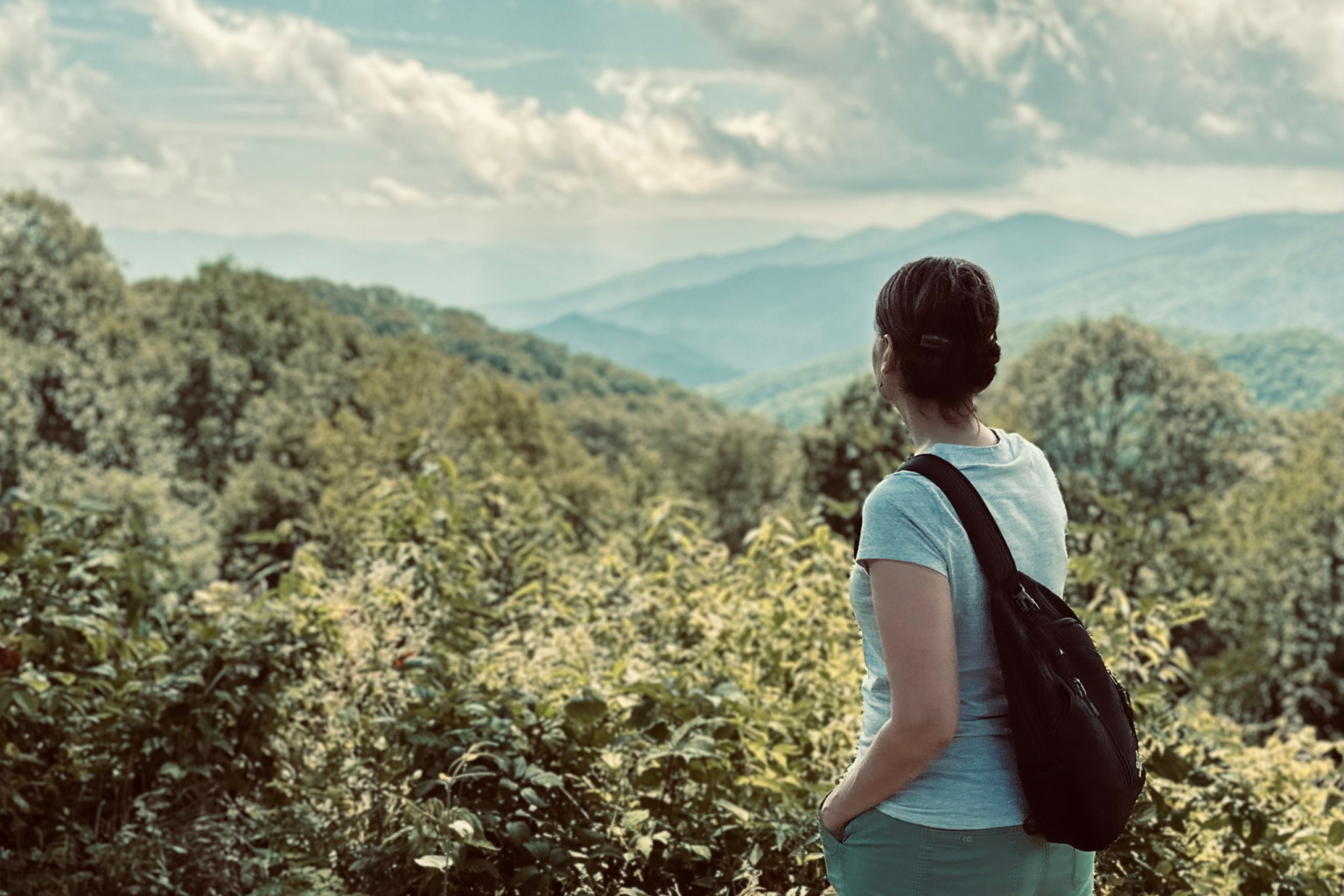
Two weeks ago, my hubby and I took a road trip to Athens, Georgia, to attend a local film festival where Merl’s short film was screened. We traveled through Indiana and Tennessee and encountered a thunderstorm while driving through Chattanooga. We made it to Georgia just in time for the viewing that night. My plan for the next day was singular—drive the winding, scenic 31-mile Newfound Gap mountain pass on U.S Route 441 through the Great Smoky Mountains National Park, between the border of Tennessee and North Carolina. 

There was just one problem. The forecast predicted rain and thunderstorms all day. Merl kept telling me that it might not rain. I slept that night after praying for clear skies to see the next national park on our bucket list. I peeped at my weather app the following morning, hoping for a change as I looked out our Airbnb window. It was partly cloudy outside, but no rain was expected until noon. 

Off we went to the mountains. We snatched our belongings, had breakfast at Another Broken Egg Cafe in Athens, and flew up the road, hoping to catch the views before the rainpour. We were blown away with yet another spectacular view of God’s green earth. Scattered blue light skies and brightly lit cotton clouds canvased overhead all day. The rain never came.

As we drove up the Smokies, we parked at a few overlooks and were met with the hazed mountain range of the Appalachian region, with the highest elevation at almost 7,000 feet. Merl and I chatted about what a mountain underneath the foliage is, a giant rock. 

I decided to do a little research on mountains and their formation, and I was taken back to my Earth Science class, where we learned about plate tectonics. Tectonic plates are large, irregularly shaped pieces of the Earth’s crust and upper mantle (hot, flowing rock). They float on the mantle and move in different directions due to its flow. 

According to geologists, most of the Smokies are sandstone, a sedimentary rock that changed under pressure when the tectonic plate of Africa crashed into the North American one. When that happened, the mineral composition of the sandstone rocks changed. They morphed like a caterpillar into a butterfly under extreme pressure.

The rocks are altered and fundamentally transformed in a process called regional metamorphism. Under extreme heat and pressure, sandstone can recrystallize, forming quartzite, a metamorphic rock.

Everyone with breath in their lungs will experience some hard times. But if we trust God through the process, a spiritual transformation will undoubtedly occur, solidifying our faith walk. The heat and pressure of life’s trials will produce a purified life for a Christian who has surrendered to God’s refining process. We will be sons and daughters who shine like our Father in a dark and weary world, grasping for hope, peace, and purpose.

Another fascinating journey unfolds over time in the Smoky Mountains; large boulders of metamorphosed sandstone embark on an adventure, falling from cliff outcrops on the mountain tops. They are gracefully carried downstream, breaking down into cobbles, pebbles, sand, and silt, as they make their way down the Mississippi River and finally reach the Gulf of Mexico. This journey, where parts of the mountain traverse to the lowlands, is a thrilling analogy of the Church as a city on a hill, with its members, like the sandstone, venturing into all the world to spread the message of God’s grace.

The Smoky Mountains offer much more than breathtaking vistas and vacation getaways. The hills resound with a symphony from the rocks, testifying to God’s creation of the world and the global Flood.

We are like common clay jars that carry this glorious treasure within, so that this immeasurable power will be seen as God’s, not ours. Though we experience every kind of pressure, we’re not crushed. At times we don’t know what to do, but quitting is not an option. We are persecuted by others, but God has not forsaken us. We may be knocked down, but not out. We continually share in the death of Jesus in our own bodies so that the resurrection life of Jesus will be revealed through our humanity. —2 Corinthians‬ ‭4‬:‭7‬-‭10‬ ‭TPT‬‬

My fellow believers, when it seems as though you are facing nothing but difficulties, see it as an invaluable opportunity to experience the greatest joy that you can! For you know that when your faith is tested it stirs up in you the power of endurance. And then as your endurance grows even stronger, it will release perfection into every part of your being until there is nothing missing and nothing lacking. —‭‭James (Jacob)‬ ‭1‬:‭2‬-‭4‬ ‭TPT‬‬

A city that is set on a hill cannot be hidden. Nor do they light a lamp and put it under a basket, but on a lampstand, and it gives light to all who are in the house. Let your light so shine before men, that they may see your good works and glorify your Father in heaven. —Matthew 5:14-16 NKJV

Hace dos semanas, mi marido y yo hicimos un viaje por carretera a Athens, Georgia, para asistir a un festival de cine local donde se proyectaba el cortometraje de Merl. Viajamos por Indiana y Tennessee y nos topamos con una tormenta eléctrica mientras conducíamos por Chattanooga. Llegamos a Georgia justo a tiempo para la proyección esa noche. Mi plan para el día siguiente era singular: conducir por el sinuoso y pintoresco paso de montaña Newfound Gap de 31 millas en la Ruta 441 de EE. UU. a través del Parque Nacional Great Smoky Mountains, entre la frontera de Tennessee y Carolina del Norte.

Solo había un problema. El pronóstico predecía lluvia y tormentas eléctricas durante todo el día. Merl me decía que tal vez no lloviera. Dormí esa noche después de rezar para que el cielo estuviera despejado para ver el próximo parque nacional en nuestra lista de deseos. Miré mi aplicación del clima a la mañana siguiente, esperando un cambio mientras miraba por la ventana de nuestro Airbnb. Estaba parcialmente nublado afuera, pero no se esperaba lluvia hasta el mediodía.

Nos fuimos a las montañas. Recogimos nuestras pertenencias, desayunamos en Another Broken Egg Cafe en Athens y volamos por la carretera, con la esperanza de disfrutar de las vistas antes de que cayera la lluvia torrencial. Nos quedamos atónitos con otra vista espectacular de la tierra verde de Dios. Cielos azules dispersos y nubes de algodón muy iluminadas nos cubrieron el cielo todo el día. La lluvia nunca llegó.

Mientras conducíamos por las Smoky Mountains, aparcamos en algunos miradores y nos encontramos con la cordillera neblinosa de la región de los Apalaches, con la elevación más alta a casi 2100 metros. Merl y yo charlamos sobre lo que es una montaña debajo del follaje: una roca gigante.

Decidí investigar un poco sobre las montañas y su formación, y me llevaron de nuevo a mi clase de Ciencias de la Tierra, donde aprendimos sobre la tectónica de placas. Las placas tectónicas son piezas grandes y de forma irregular de la corteza terrestre y el manto superior (roca caliente y fluida). Flotan sobre el manto y se mueven en diferentes direcciones debido a su flujo.

Según los geólogos, la mayor parte de las Smoky Mountains son areniscas, una roca sedimentaria que cambió bajo presión cuando la placa tectónica de África chocó contra la de América del Norte. Cuando eso sucedió, la composición mineral de las rocas de arenisca cambió. Se transformaron como una oruga en una mariposa bajo una presión extrema.

Las rocas se alteran y se transforman fundamentalmente en un proceso llamado metamorfismo regional. Bajo calor y presión extremos, la arenisca puede recristalizarse, formando cuarcita, una roca metamórfica.

Todos los que respiran en sus pulmones pasarán por momentos difíciles. Pero si confiamos en Dios a través del proceso, sin duda ocurrirá una transformación espiritual, que solidificará nuestro camino de fe. El calor y la presión de las pruebas de la vida producirán una vida purificada para un cristiano que se ha rendido al proceso refinador de Dios. Seremos hijos e hijas que brillarán como nuestro Padre en un mundo oscuro y cansado, aferrándose a la esperanza, la paz y el propósito.

Otro viaje fascinante se desarrolla a lo largo del tiempo en las Smoky Mountains; Grandes rocas de arenisca metamorfoseadas se lanzan a la aventura, cayendo desde los afloramientos de los acantilados en las cimas de las montañas. Son arrastradas con gracia río abajo, descomponiéndose en guijarros, arena y limo, a medida que avanzan por el río Misisipi y finalmente llegan al Golfo de México. Este viaje, en el que partes de la montaña atraviesan las tierras bajas, es una analogía emocionante de la Iglesia como una ciudad en una colina, con sus miembros, como la arenisca, aventurándose por todo el mundo para difundir el mensaje de la gracia de Dios.

Somos como vasijas de barro comunes que llevan este glorioso tesoro en su interior, para que este poder inmensurable sea visto como de Dios, no como nuestro. Aunque experimentamos todo tipo de presión, no nos sentimos aplastados. A veces no sabemos qué hacer, pero rendirnos no es una opción. Somos perseguidos por otros, pero Dios no nos ha abandonado. Puede que seamos derribados, pero no derrotados. Continuamente participamos de la muerte de Jesús en nuestros propios cuerpos para que la vida de resurrección de Jesús se revele a través de nuestra humanidad. —2 Corintios 4:7-10 TPT

Mis queridos hermanos, cuando parezca que solo están enfrentando dificultades, véanlo como una oportunidad invaluable de experimentar el mayor gozo posible. Porque saben que cuando su fe es puesta a prueba, se aviva en ustedes el poder de la perseverancia. Y cuando esa perseverancia se hace más fuerte, libera perfección en cada parte de su ser hasta que no les falta ni les falta nada. —Santiago (Jacob) 1:2-4 TPT

Una ciudad asentada sobre un monte no se puede esconder. Ni se enciende una lámpara y se pone debajo de un almud, sino sobre el candelero, y alumbra a todos los que están en casa. Así alumbre vuestra luz delante de los hombres, para que vean vuestras buenas obras y glorifiquen a vuestro Padre que está en los cielos. —Mateo 5:14-16 NVI

Devotional

Good News Bears

About a week ago, I was thinking about the 1976 movie The Bad News Bears starring Walter Matthau. The screenwriter wrote an offensive line coming out of the mouth of an 11-year-old. The fruit of his mouth reflected what he was taught by those close to him.

And I’m sure you’ve also heard the phrase, “(S)he is bad news!” That’s the kind of person you stay away from because they’ll likely bring trouble into your life.

Well, the reverse is also true—good news bears.

The Greek word for “gospel” is euangelion, which is made up of eû (good) and ángelos (messenger). The good news (gospel) of Jesus Christ produces good fruit through those willing to allow its seed to penetrate deeply into the soil of their hearts. (See Luke 8:5-8)

Eternal life, which is supernatural life, is the fruit of intimacy. The scriptures teach us that knowing God and His Son Jesus is eternal life (John 17:3). From that union with God, like a branch connected to the vine, good and lasting fruit is produced.

Good fruit is born from a good tree. John the Baptist exhorted us to “produce fruit in keeping with repentance” (Matt 3:8). When you turn away from anything that produces spiritual and physical death and cultivate an intimate relationship with God through Jesus, you will bear good fruit.

Cultivating intimacy with God and remaining in his presence through His word and prayer, will produce supernatural fruit in your life through His power.

Let’s be mindful of who we align ourselves with, what news we receive in our hearts, and what fruit we are producing.

I am the vine, you are the branches; the one who remains in Me, and I in him bears much fruit, for apart from Me you can do nothing. If anyone does not remain in Me, he is thrown away like a branch and dries up; and they gather them and throw them into the fire, and they are burned. If you remain in Me, and My words remain in you, ask whatever you wish, and it will be done for you. My Father is glorified by this, that you bear much fruit, and so prove to be My disciples. —‭‭John‬ ‭15‬:‭5‬-‭8‬ ‭NASB

A good tree cannot bear bad fruit, nor can a bad tree bear good fruit. —‭‭Matthew‬ ‭7‬:‭18‬ ‭NASB

What a beautiful sight to behold— the precious feet of the messenger coming over the mountains to announce good news! He comes to refresh us with wonderful news, announcing salvation to Zion and saying, “Your Mighty God reigns!” —‭‭Isaiah‬ ‭52‬:‭7‬ ‭TPT‬‬

Hace una semana, estaba pensando en la película de 1976 The Bad News Bears (Los Osos de Malas Noticias), protagonizada por Walter Matthau. El guionista escribió una frase ofensiva que salió de la boca de un niño de 11 años. El fruto de su boca reflejaba lo que le habían enseñado sus allegados.

Y estoy seguro de que también has oído la frase: “¡(Ella) es una mala noticia!”. Ese es el tipo de persona de la que te alejas porque es probable que traiga problemas a tu vida.

Bueno, lo contrario también es cierto: las buenas noticias también traen fruto.

La palabra griega para “evangelio” es euangelion, que se compone de eû (bueno) y ángelos (mensajero). Las buenas noticias (evangelio) de Jesucristo producen buenos frutos a través de aquellos que están dispuestos a permitir que su semilla penetre profundamente en la tierra de sus corazones. (Véase Lucas 8:5-8)

La vida eterna, que es vida sobrenatural, es el fruto de la intimidad. Las Escrituras nos enseñan que conocer a Dios y a su Hijo Jesús es vida eterna (Juan 17:3). De esa unión con Dios, como una rama conectada a la vid, se produce fruto bueno y duradero.

De un buen árbol nace buen fruto. Juan el Bautista nos exhortó a “producir frutos dignos de arrepentimiento” (Mateo 3:8). Cuando te alejas de todo lo que produce muerte espiritual y física y cultivas una relación íntima con Dios a través de Jesús, darás buen fruto.

Cultivar la intimidad con Dios y permanecer en su presencia a través de su palabra y oración, producirá fruto sobrenatural en tu vida a través de su poder.

Seamos conscientes de con quién nos alineamos, qué noticias recibimos en nuestro corazón y qué fruto estamos produciendo.

Yo soy la vid, vosotros los sarmientos; el que permanece en mí, y yo en él, ése da mucho fruto; porque separados de mí nada podéis hacer. El que no permanece en mí, es desechado como sarmiento, y se seca; los recogen, los echan al fuego y arden. Si permanecéis en mí, y mis palabras permanecen en vosotros, pedid todo lo que queráis, y os será hecho. Mi Padre es glorificado en esto, en que llevéis mucho fruto, y seáis así mis discípulos. —Juan 15:5-8 NVI

No puede un árbol bueno dar frutos malos, ni un árbol malo dar frutos buenos. —Mateo 7:18 NVI

¡Qué hermoso espectáculo es ver los preciosos pies del mensajero que viene por las montañas a anunciar buenas noticias! Viene a refrescarnos con noticias maravillosas, anunciando la salvación a Sión y diciendo: “¡Tu Dios Poderoso reina!” —Isaías 52:7 TPT

Devotional

Losing Words

When my husband was asked to play the lead role in a play in Chicago years ago, he had one month to memorize his spoken lines, the lyrics to eight songs, and the accompanying musical pieces on guitar. 

The play ran for a month and a half, and at the beginning of that run, there were times when he forgot his lines.

He lost the words he needed to speak. 

And a beautiful thing would happen. His fellow actors helped to remind him of the forgotten words. They would improvise a line that sparked his memory, and he would then remember. The words would all come flooding back to him. 

Many things can cause us to forget what we desperately need to remember, and this usually happens when hard times encroach upon us. Fear, stress, sadness, pain, and anxiety can make our minds go blank. But there is hope.

It is vitally important to work at planting the word of God deep within us. It is a source of strength and guidance, always readily accessible to us, especially in times of need for ourselves or another. The bottom line is that the word of God is not just reliable but powerful enough to speak into every situation of our lives. 

We have received from God the gift of the Helper to remember the word. He not only teaches us all things but also reminds us of every word Jesus taught and found in the scriptures. But we must study and meditate on it for the Holy Spirit to remind us of it. 

Let’s be the type of people and friends with a ready word in and out of season. We need each other but are only as good to one another as the quality of our intimacy with the word of God, both written and living.

So will My word be which goes forth from My mouth; It will not return to Me empty, Without accomplishing what I desire, And without succeeding in the matter for which I sent it. – Isaiah 55:11, NASB

My son, attend to my words; incline thine ear unto my sayings. Let them not depart from thine eyes; keep them in the midst of thine heart. For they are life unto those that find them, and health to all their flesh. –Proverbs 4:20-22, MSG

These things I have spoken to you while remaining with you. But the Helper, the Holy Spirit whom the Father will send in My name, He will teach you all things, and remind you of all that I said to you. —John‬ ‭14‬:‭25‬-‭26‬, NASB

Cuando hace años le pidieron a mi esposo que interpretara el papel principal en una obra de teatro en Chicago, tuvo un mes para memorizar sus líneas habladas, la letra de ocho canciones y las piezas musicales de guitarra que las acompañaban.

La obra duró un mes y medio y, al comienzo de esa ejecución, hubo momentos en que se olvidó de sus líneas.

Perdió las palabras que necesitaba para hablar.

Y algo hermoso sucedería. Sus compañeros actores ayudaron a recordarle las palabras olvidadas. Improvisaban una línea que despertaba su memoria y luego la recordaba. Todas las palabras volverían a él.

Muchas cosas pueden hacer que olvidemos lo que necesitamos recordar desesperadamente, y esto suele ocurrir cuando nos invaden tiempos difíciles. El miedo, el estrés, la tristeza, el dolor y la ansiedad pueden hacer que nuestra mente se quede en blanco. Pero hay esperanza.

Es de vital importancia trabajar para sembrar la palabra de Dios en lo más profundo de nosotros. Es una fuente de fortaleza y guía, siempre fácilmente accesible para nosotros, especialmente en momentos de necesidad para nosotros mismos o para otros. La conclusión es que la palabra de Dios no sólo es confiable sino lo suficientemente poderosa como para hablar en cada situación de nuestras vidas.

Hemos recibido de Dios el don del Consolador para recordar la palabra. Él no solo nos enseña todas las cosas, sino que también nos recuerda cada palabra que Jesús enseñó y encontró en las Escrituras. Pero debemos estudiarlo y meditarlo para que el Espíritu Santo nos lo recuerde.

Seamos el tipo de personas y amigos que tienen una palabra lista dentro y fuera de temporada. Nos necesitamos unos a otros, pero somos tan buenos unos con otros como la calidad de nuestra intimidad con la palabra de Dios, tanto escrita como viva.

Así será mi palabra que sale de mi boca; No volverá a Mí vacía, sin realizar lo que deseo y sin lograr el fin para el cual la envié. – Isaías 55:11, LBLA

Hijo mío, atiende a mis palabras; inclina tu oído a mis dichos. No se aparten de tus ojos; guárdalos en medio de tu corazón. Porque son vida para quienes los encuentran, y salud para toda su carne. –Proverbios 4:20-22, MSG

Estas cosas os he hablado mientras permanecía con vosotros. Pero el Consolador, el Espíritu Santo, que el Padre enviará en mi nombre, él os enseñará todas las cosas y os recordará todo lo que os he dicho. —Juan 14:25-26, LBLA