When we do what pleases God, He is faithful to take care of us. And what pleases God’s heart is when we lay our desires down to care for another, even when it is hard. That person may depend on us for sustenance or comfort, and the duties of the day may repeat themselves, sometimes for years.
We’re exhausted and keep going, but can’t figure out where the energy is coming from, until we figure it out. It may take us a minute to see God at work behind the scenes, how that season will teach us the deepest lessons, and the reward for our faithfulness to Him.
When we’ve lost loved ones, feel like we have no resources, and the plans for our lives have been eaten by the moths of time, God reveals Himself as the One who loves us and has given us the strength to endure the hardest of the hard.
And we also see our redeemer’s life and sacrifice more clearly. Jesus’ mission was other-focused. He wasn’t after what was best for Him. Jesus did not spend His time on platforms; He went after people. His ears were attuned to hear the Father, and His eyes were set on His ways.
This reminds me of the biblical story of Ruth the Moabitess. Moab was a pagan nation with a historical animosity toward the Israelites. Ruth ended up marrying an Israelite from Bethlehem who had sojourned to Moab with his parents and brother, due to a famine in Israel. Before her marriage, her father-in-law died, leaving Naomi, her future mother-in-law, widowed. After the two sons died as well, all the women suffered shared losses.
But Ruth would not leave her mother-in-law’s side, even when she was telling her to go back to her people and to her gods. Ruth was determined not to leave Naomi and journeyed with her back to Bethlehem. She left behind a cruel and pagan nation whose priests served a host of idols, including the feared god Molech, whom they would offer child sacrifices to. Ruth decided to not only follow Naomi, but the God of Israel as well.
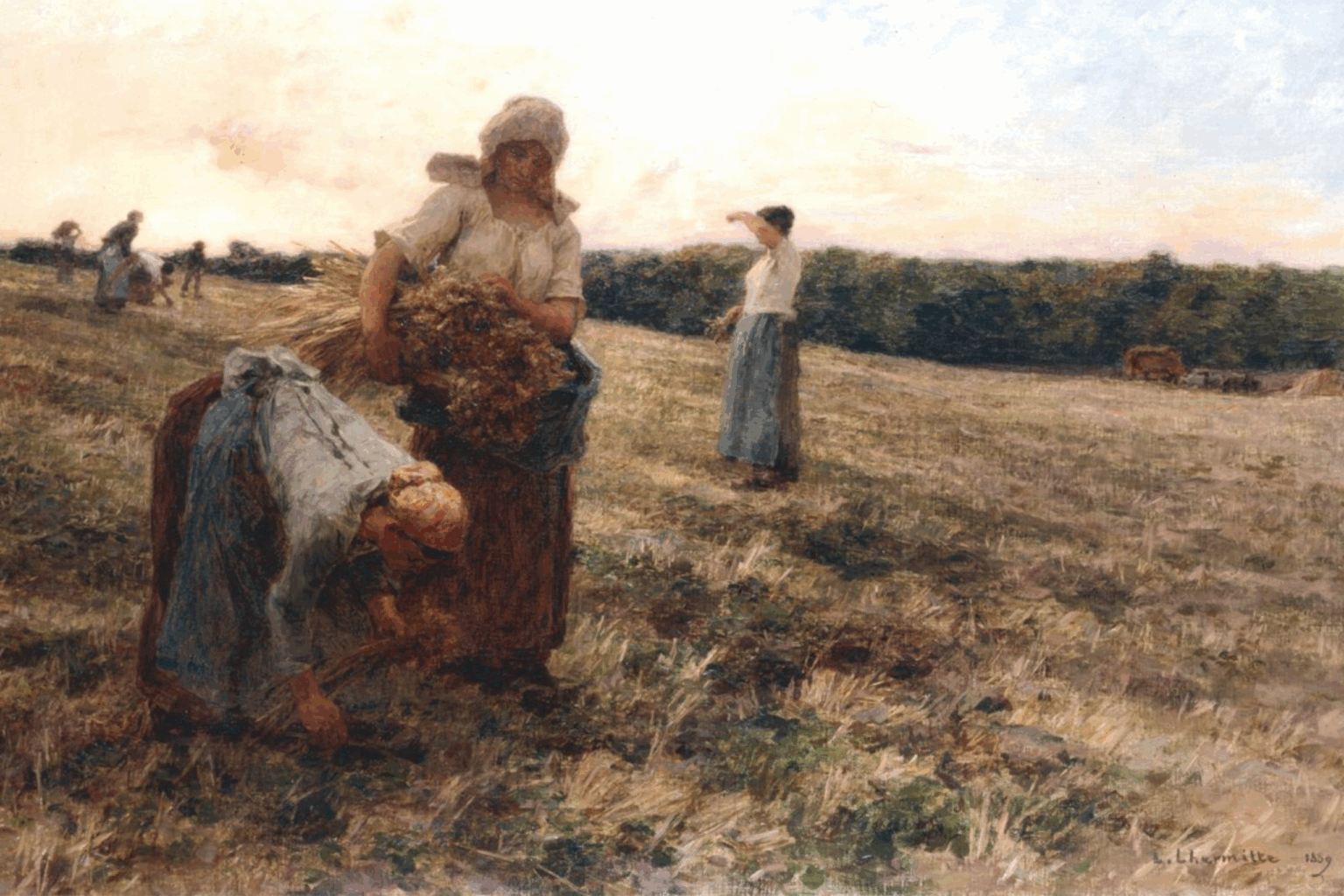
After they arrived in Bethlehem, Ruth asked Naomi to allow her to go to a field and glean among the ears of grain after the reapers. That is where she met Boaz, a man of great wealth. He said to her, “Listen carefully, my daughter. Do not go to glean in another field; furthermore, do not go from this one, but stay here with my maids.”
Ruth only gleaned in the field of Boaz while she was living with Naomi through a hard season.
Is that not what Jesus says to us? Do not go to other fields for your bread, for … “I am the bread of life.” Glean from the field of God’s word, verse by verse, for His plans, promises, and provision. The scriptures are an endless treasury for our souls, earmarked for each of us for all of our days. They will provide us with living truth, hope, comfort, joy, and wisdom, amidst a world of derelict ideas that attempt to drag us away from walking with God.
Ruth asked Boaz why she had found favor in his eyes, and he replied that he was told of all that she had done for her mother-in-law and how she left her parents and the land of her birth for an unknown future. God is the redeemer of our losses and our time. Ruth was favored by Boaz; he was kind to her and comforted her, even though she was not like the other maidservants.
Although it was not her motive, Ruth was graciously blessed, and Boaz married her, after the first in line to buy Naomi’s property and marry Ruth, rejected the offer. We know that too well. Although we may be the world’s pickings, we are created, chosen, and cherished by the God who sacrificed His son, Jesus, that we may have an eternal home in the wealth of His presence, as sons and daughters and the glorious bride of the Messiah.
What became of Ruth after she married Boaz? She became the great-grandmother of King David and an ancestor of Jesus Christ. God has a plan for each of our lives, but they may not all look the same or go as we planned, but it will be a fulfilled life, if we live like Christ, who laid down His life, that others may live.
Photo: “Gleaners at Sunset’ by French realist artist Leon-Augustin Lhermitte (1889)
Boaz went over and said to Ruth, “Listen, my daughter. Stay right here with us when you gather grain; don’t go to any other fields. Stay right behind the young women working in my field. - Ruth 2:8, NLT
May the Lord reward your work, and may your wages be full from the Lord, the God of Israel, under whose wings you have come to take refuge. - Ruth 2:12 NASB
And now, my daughter, do not fear, I will do for you all that you ask, for all my fellow townsmen know that you are a woman of worth. - Ruth 3:11 RSV
Cuando hacemos lo que agrada a Dios, Él es fiel en cuidarnos. Y lo que agrada a Dios es cuando entregamos nuestro deseo de cuidar a otra persona, incluso cuando es difícil. Esa persona puede depender de nosotros para su sustento o consuelo, y las tareas del día pueden repetirse, a veces durante años.
Estamos agotados y seguimos adelante, pero no podemos entender de dónde proviene la energía hasta que lo descubrimos. Puede que nos tome un minuto ver a Dios obrando tras bambalinas, cómo esa etapa nos enseñará las lecciones más profundas y la recompensa por nuestra fidelidad a Él.
Cuando hemos perdido a seres queridos, sentimos que no tenemos recursos y los planes para nuestras vidas se han devorado por el paso del tiempo, Dios se revela como Aquel que nos ama y nos ha dado la fuerza para soportar lo más difícil.
Y también vemos con mayor claridad la vida y el sacrificio de nuestro redentor. La misión de Jesús estaba centrada en los demás. No buscaba lo mejor para sí mismo. Jesús no pasaba su tiempo en plataformas; buscaba a la gente. Sus oídos estaban atentos al Padre y su mirada puesta en sus caminos.
Esto me recuerda la historia bíblica de Rut la moabita. Moab era una nación pagana con una animosidad histórica hacia los israelitas. Rut terminó casándose con un israelita de Belén que había emigrado a Moab con sus padres y su hermano debido a una hambruna en Israel. Antes de casarse, su suegro murió, dejando viuda a Noemí, su futura suegra. Tras la muerte de sus dos hijos, todas las mujeres sufrieron pérdidas compartidas.
Pero Rut no se separó de su suegra, ni siquiera cuando esta le decía que regresara con su pueblo y sus dioses. Rut estaba decidida a no dejar a Noemí y viajó con ella de regreso a Belén. Dejó atrás una nación cruel y pagana cuyos sacerdotes servían a una multitud de ídolos, incluyendo al temido dios Moloc, a quien ofrecían sacrificios de niños. Rut decidió no solo seguir a Noemí, sino también al Dios de Israel.
Después de llegar a Belén, Rut le pidió a Noemí que la dejara ir a un campo a espigar entre las espigas tras los segadores. Allí conoció a Booz, un hombre rico. Él le dijo: «Escucha atentamente, hija mía. No vayas a espigar a otro campo; ni te vayas de este, sino quédate aquí con mis criadas».
Rut solo espigó en el campo de Booz mientras vivía con Noemí una época difícil.
¿No es eso lo que nos dice Jesús? No vayan a otros campos en busca de su pan, porque… «Yo soy el pan de vida». Espiguen del campo de la palabra de Dios, versículo a versículo, para conocer sus planes, promesas y provisión. Las Escrituras son un tesoro inagotable para nuestras almas, destinadas a cada uno de nosotros para todos nuestros días. Nos brindarán verdad viva, esperanza, consuelo, alegría y sabiduría, en medio de un mundo de ideas abandonadas que intentan apartarnos de nuestro caminar con Dios.
Rut le preguntó a Booz por qué había hallado favor ante sus ojos, y él respondió que le habían contado todo lo que ella había hecho por su suegra y cómo dejó a sus padres y su tierra natal por un futuro incierto. Dios es el redentor de nuestras pérdidas y de nuestro tiempo. Rut fue favorecida por Booz; él fue bondadoso con ella y la consoló, aunque ella no era como las demás siervas.
Aunque no era su motivo, Rut fue bendecida generosamente, y Booz se casó con ella, después de que el primero en la fila para comprar la propiedad de Noemí y casarse con Rut rechazara la oferta. Lo sabemos muy bien. Aunque seamos la presa predilecta del mundo, somos creados, elegidos y amados por el Dios que sacrificó a su hijo, Jesús, para que tengamos un hogar eterno en la riqueza de su presencia, como hijos e hijas y la gloriosa novia del Mesías.
¿Qué fue de Rut después de casarse con Booz? Se convirtió en la bisabuela del rey David y antepasada de Jesucristo. Dios tiene un plan para cada una de nuestras vidas, aunque puede que no todas sean iguales ni transcurran como las planeamos, pero será una vida plena si vivimos como Cristo, quien dio su vida para que otros puedan vivir.
 As I was studying Jeremiah 36:1-32, I realized how encouraging this Bible passage could be to aspiring writers and storytellers. Many writers struggle with telling their personal stories, myself included, especially with how much of it to tell. What may help with that is a matter of perspective. Our stories are a vehicle used to tell the bigger story.